
Why is pregnancy a higher risk time for domestic and family violence? Responding to a common question from health staff
Introduction
This is a question I get asked often when delivering training to nurses, midwives, and other health professionals:
“Why is pregnancy a higher-risk time for women experiencing domestic and family violence?”
It’s an important question, and how we answer it matters.
Pregnancy does not cause violence.
Violence is a choice made by the person using it.
The evidence tells us:
Pregnancy can increase risk as it may intensify patterns of coercive control and increase vulnerability (Toivonen & Backhouse, 2018). It is also a significant life transition that may intersect with relationship dynamics and form part of the context in which violence can escalate.
For health staff, this reinforces the importance of understanding how risk can shift or escalate during pregnancy, even when it may not be immediately visible.
Pregnancy is a recognised high-risk period
Across the evidence base, pregnancy and the postnatal period are consistently identified as times of increased risk for the onset or escalation of violence. Pregnancy is recognised as a high-risk factor within state and territory DFV risk assessment frameworks and is reflected in national guidance, including the National Risk Assessment Principles, which identify pregnancy as a period of increased risk (Toivonen & Backhouse, 2018).
Violence may:
begin during pregnancy
increase in frequency or severity
shift in form (for example, from emotional abuse to physical or sexual violence)
Research shows that the severity of violence can escalate during pregnancy or postpartum (Stadtlander, 2018).
Pregnancy is also linked to serious outcomes, including:
preterm birth
low birthweight
foetal injury and placental complications
increased risk of maternal mental health issues (Chisholm et al., 2017; Stadtlander, 2018)
There is strong evidence that homicide is a leading cause of maternal death, most often perpetrated by a current or former intimate partner (Campbell et al., 2007; Wallace et al., 2021).
For health professionals, this reinforces the importance of recognising pregnancy as a period where risk may increase and where careful, sensitive enquiry and screening are needed.
Pregnancy can intensify coercive control
DFV is not just about incidents of physical harm. It is about patterns of coercive control.
Pregnancy can create new opportunities for the person using violence to extend or intensify that control.
This may include:
reproductive coercion (including pressure to become pregnant, interference with contraception, or controlling decisions about continuing or ending a pregnancy)
monitoring or restricting healthcare access
controlling who the woman sees or speaks to
increasing surveillance of movements
sexual violence during pregnancy
Health settings can also become part of this dynamic.
For example:
attending all of her appointments and speaking on behalf of the woman
limiting her opportunity to speak privately
controlling access to transport or communication
In this way, pregnancy is not just a life event — it can become another source of control over the woman’s body, decisions, and autonomy.
Pregnancy can increase vulnerability and barriers to safety
Pregnancy can also increase structural and practical vulnerability, which perpetrators may exploit.
This can include:
increased financial dependence
housing instability
reduced ability to work
greater reliance on the perpetrator for transport, care, or support
fear about raising a child alone
concerns about child protection involvement
These are the realities many victim-survivors are navigating, and they shape safety, options, and decision-making.
For many women, pregnancy is a time when leaving becomes more complex, not less.
Understanding pregnancy as a point of change and increased risk
Pregnancy is a major life transition. It brings changes in:
identity
relationships
finances
expectations about the future
Some qualitative research and practitioner insights suggest that pregnancy can also coincide with changes in relationship dynamics, including increased stress, shifting attention, or conflict about the future. These factors do not cause violence but may form part of the context in which perpetrators choose to escalate controlling behaviours (Brownridge et al., 2011).
This may include situations where violence escalates in response to:
conflict about commitment
jealousy or attention shifting away from the perpetrator
stress related to financial or parenting expectations
However, it is important to be clear.
These are not causes of violence. They are contexts in which perpetrators may choose to increase control.
The responsibility for violence always sits with the person using it.
What this means for health staff
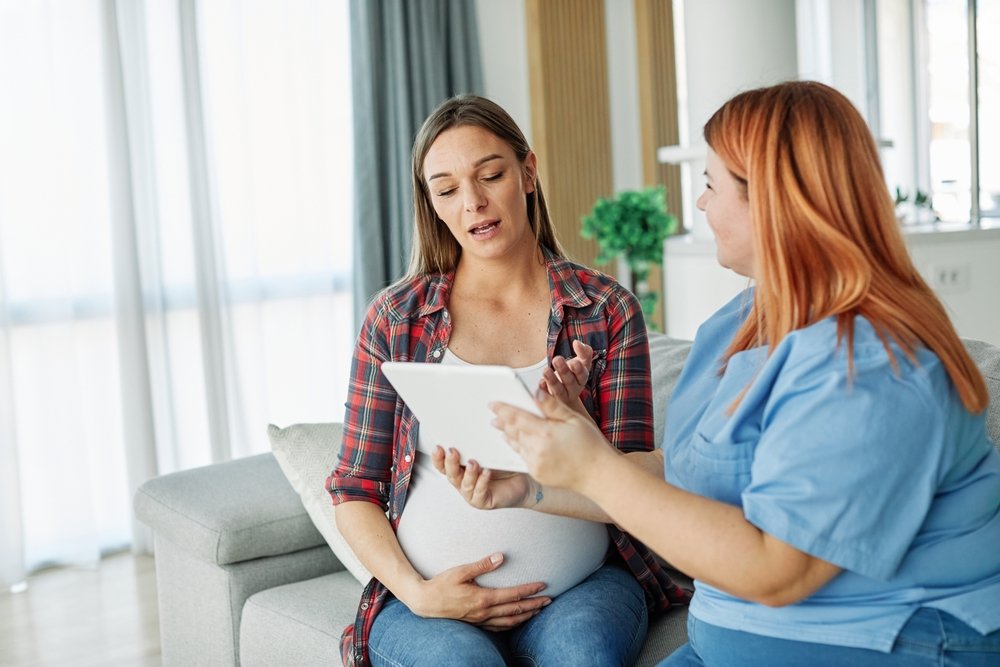
Health professionals are in a unique and critical position.
They may be one of the few people a woman sees regularly and privately during pregnancy.
The evidence supports:
routine, sensitive enquiry about safety
ensuring opportunities to speak alone and confidentially
being aware that perpetrators may be present or monitoring
understanding that coercive control may be present even without physical violence
recognising pregnancy as a potential escalation point
Even where there is no disclosure, how health professionals respond, including creating a safe, respectful environment and using clinical judgement about what is safe to offer — can make a difference.
Conclusion
Pregnancy itself does not create violence, but in the context of DFV, it can be a time when risk increases.
In this context, it may also be a time when:
coercive control can intensify
vulnerability can increase
and risk can escalate
For health professionals, this means:
do not assume safety
ask, but ask safely
look beyond physical violence
understand the broader pattern of control
share information and referral pathways if safe to do so
Because sometimes, pregnancy is not a time of protection.
It is a time when women and babies need increased safety, visibility, and support.
Key takeaways
Pregnancy is a recognised high-risk period for the onset or escalation of DFV (Toivonen & Backhouse, 2018)
Violence may increase in severity, frequency, or form
Pregnancy can become a site of coercive control and reproductive abuse
Structural factors (financial, housing, care needs) can increase vulnerability and barriers to leaving
Health professionals play a critical role in safe enquiry, early identification, and support
The focus should remain on perpetrator behaviour, not victim-survivor decision-making
References
Brownridge, D. A., Taillieu, T. L., Tyler, K. A., Tiwari, A., Chan, K. L., & Santos, S. C. (2011). Pregnancy and intimate partner violence: Risk factors, severity, and health effects. Violence Against Women, 17(7), 858–881.
Campbell, J. C., Glass, N., Sharps, P., Laughon, K., & Bloom, T. (2007). Intimate partner homicide: Review and implications. Trauma, Violence, & Abuse, 8, 246–269.
Chisholm, C., Bullock, L., & Ferguson, J. (2017). Intimate partner violence and pregnancy: Epidemiology and impact. American Journal of Obstetrics and Gynecology, 217(2), 141–144.
Stadtlander, L. (2018). Pregnancy and intimate partner violence. International Journal of Childbirth Education, 33(4), 28–31.
Toivonen, C., & Backhouse, C. (2018). National Risk Assessment Principles for domestic and family violence. ANROWS.
Wallace, M., Gillispie-Bell, V., Cruz, K., Davis, K., & Vilda, D. (2021). Homicide during pregnancy and the postpartum period in the United States, 2018–2019. JAMA Network Open, 4(11), e2136807. https://doi.org/10.1001/jamanetworkopen.2021.36807