
Gaslighting as coercive control: What practitioners need to know

Introduction
The word gaslighting has become common in everyday language, often used to describe emotional manipulation. But within domestic and family violence (DFV), it has a much deeper and more dangerous meaning.
Gaslighting is a deliberate form of psychological abuse and a key tactic of coercive control. It is used to confuse, isolate, and disempower a victim-survivor until they begin to question their own memory, perception, and sense of reality. Gaslighting has been described as a pattern of behaviour that undermines autonomy and entrenches control over time (VAW Learning Network, 2020).
Recent Australian research by Darke, Jones and Flanagan (2025) highlights gaslighting as a mechanism of coercive control and a central part of the power dynamics that sustain intimate partner violence. While there is no universally accepted definition, there is broad agreement that gaslighting involves manipulating a person’s perception of truth and reality in ways that cause significant and lasting harm.
For practitioners, recognising and responding to gaslighting is essential. Understanding how it operates and how victim-survivors experience it strengthens our ability to respond safely, ethically, and effectively in practice.
How victim-survivors describe gaslighting in DFV
Research by Darke et al. (2025) draws directly on the voices of victim-survivors and support workers to describe how gaslighting is experienced in DFV contexts. Their findings move beyond popular ideas of “lying” or “mind games” and instead identify gaslighting as a patterned set of behaviours that undermine autonomy, self-trust, and reality.
Victim-survivors identified the following interrelated components.
A perpetrator challenging the victim’s perception of reality
Perpetrators deny events, fabricate information, or reverse blame so that the victim-survivor begins to doubt their own recollection.
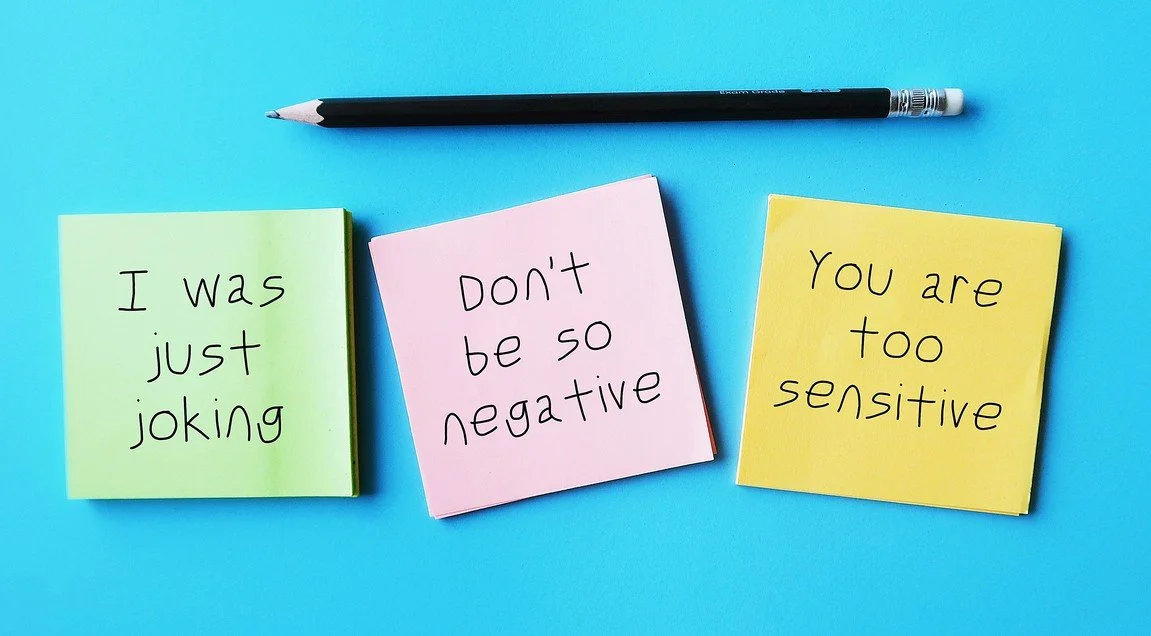
“That never happened.”
“You’re being dramatic, you made me do it.”
Victim-survivors doubting their own perception
Over time, repeated contradiction and blame can lead women to question themselves, wondering if they are overreacting, forgetful, or “losing it”.
Frequency and intensity
Gaslighting is rarely a one-off event. It occurs repeatedly and often escalates, adding another layer of confusion and self-doubt with each incident.
Use of other forms of abuse
Gaslighting frequently co-occurs with other forms of DFV, including emotional, verbal, financial, and physical abuse. These tactics reinforce fear, dependency, and entrapment.
Isolation from support
Friends, family members, and even professionals may be drawn into the perpetrator’s version of events, leaving the victim-survivor increasingly isolated.
Varied modes of gaslighting
Gaslighting can occur through words, tone, gestures, manipulation of physical space, technology, or social situations, not only through verbal exchanges.
Intentionality
While some victim-survivors described the behaviour as automatic or habitual, most practitioners viewed gaslighting as a deliberate strategy used to gain and maintain control (Darke et al., 2025).
The perpetrator–victim relationship
Gaslighting thrives in intimate relationships where trust, care, and emotional closeness are leveraged as tools of control. Taken together, these behaviours create what many victim-survivors describe as a “fog of unreality.” Gaslighting is not a single act, it is a sustained pattern that undermines a person’s ability to trust themselves and act safely.
Gaslighting and power
Gaslighting does not occur in isolation. It works because of the power differences already present in relationships and communities.
Sociologist Paula Sweet (2019) explains that gaslighting is not only psychological but also shaped by social attitudes particularly those that frame women as “too emotional”, “irrational”, or “unstable”. When perpetrators use language like crazy or hysterical, they draw on these stereotypes to make their partner appear less credible.
For many women, this disbelief is reinforced by the wider community and the systems around them.
First Nations women may experience racism or community-based shame that silences disclosure
Culturally and linguistically diverse women (CALD) may face language barriers or cultural minimisation of harm
Women with disability or mental health histories may be routinely doubted or dismissed
Gaslighting thrives in these conditions. As practitioners, we can interrupt this dynamic by listening carefully, believing women, and naming psychological abuse without pathologising or blaming.
The psychological and social impact
Gaslighting causes profound psychological harm. Victim-survivors may present as uncertain, inconsistent, or anxious responses that can easily be misread as confusion or emotional overwhelm rather than recognised as trauma.
Common impacts include:
Doubting one’s own memory and perception
Anxiety, hypervigilance, and self-blame
Loss of confidence and decision-making ability
Emotional disconnection or “fog”
Isolation and dependence on the perpetrator
These responses reflect survival and coping in the context of sustained psychological abuse. Victim-survivors in Darke et al.’s study described gaslighting as one of the most harmful and enduring forms of abuse, with impacts often continuing long after the relationship has ended.
What this looks like in practice
Gaslighting doesn’t always sound like violence. Instead of describing physical harm, a woman might say she feels confused, unsure of herself, or unable to trust her own memory. Gaslighting is commonly described as behaviour that causes a person to doubt their perceptions, feelings, and sense of reality (Respect Victoria, 2023).
Listening for these cues helps practitioners recognise when psychological abuse may be occurring. This might sound like frequent apologies, hesitation about details, or comments such as, “Maybe I’m just overreacting.”
How Practitioners Can Respond
Trauma-informed, empowerment-based responses include:
Validate lived experience
“It sounds like he’s been making you doubt yourself , that’s not okay.”
Avoid debating details
Focus on patterns and impact rather than proving specific events.
Name the behaviour when helpful.
“This is a form of psychological abuse. It can leave people feeling confused or questioning themselves.”
Support self-trust
Encourage reflection, journalling, or grounding to reconnect with internal knowledge.
Be alert to professional manipulation.
Perpetrators may attempt to manipulate workers or systems. Staying grounded through documentation, supervision, and collaboration supports ethical and safe practice.

Using the Term “Gaslighting” With Clients
The term gaslighting can be validating for some clients, particularly those already familiar with coercive control language. However, for others especially First Nations and CALD women it may not translate or feel culturally relevant.
In some languages, there is no direct equivalent. In others, the term may feel clinical or distant from lived experience. Cultural understandings of relationships, shame, respect, and community strongly influence how psychological abuse is named and understood.
Best practice includes:
Mirroring the client’s language
Describing behaviour before introducing terminology
Explaining the term simply if used
Prioritising behaviour-based language in community resources
Professional reflection
Gaslighting can also affect practitioners, particularly when perpetrators attempt to manipulate services or shift blame. Reflective practice, supervision, and peer support are essential safeguards.
Our role is not to define a woman’s reality, it is to support her to trust her own again.
Key takeaway
Use language that connects, not language that corrects.
Recognising gaslighting as coercive control means looking beyond single incidents to see how behaviour builds over time to confuse, isolate, and control. Supporting women to reclaim their voice and sense of truth is one of the most powerful ways practitioners can counter this form of abuse.
References
Darke S., Jones C., & Flanagan A. (2025). Defining Gaslighting in Intimate Partner Violence: Insights from Victim Survivors and Support Service Providers. Psychology, Public Policy, and Law. Advance online publication.
Sweet, P. L. (2019). The Sociology of Gaslighting. American Sociological Review, 84(5), 851–875. https://doi.org/10.1177/0003122419874843
VAW Learning Network (2020). Gaslighting in Intimate Relationships: A Form of Coercive Control You Need to Know More About. https://www.vawlearningnetwork.ca
Respect Victoria (2023). Red Flags: What is Gaslighting and Why is it Dangerous? https://www.respectvictoria.vic.gov.au/news/red-flags-what-gaslighting-and-why-it-dangerous